
Preventing and reducing damage from early autumn frosts
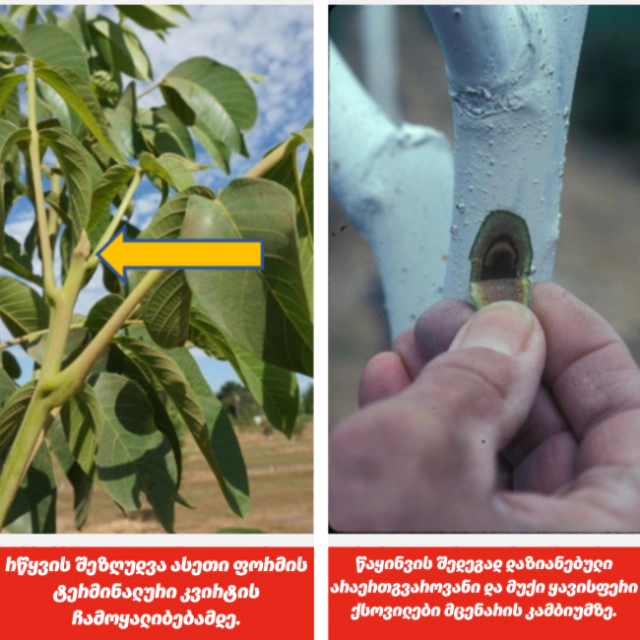
Early autumn frost damage occurs when plants have not entered full dormancy before freezing temperatures arrive. Measures to protect walnut orchards from early autumn frosts should be part of routine summer and autumn management. These include controlled irrigation and nutrition to prevent flushes of frost-sensitive green growth. The source also calls for complete dehydration of trees after harvest and active irrigation during frosts. Preparatory measures:
Preparatory measures: The tips of one-year-old shoots are particularly vulnerable to frost damage. Avoid excessive nitrogen, especially during the second half of the growing season. Stop supplying nitrogen to young trees from mid-August and to bearing trees by early September. For new plantings, restrict irrigation from early to mid-September so that terminal buds stop growing and take on the appearance shown in the left-hand photograph. Then resume irrigation to avoid stressing the plants. In bearing trees, terminal buds normally reach this stage when irrigation is stopped before harvest. Where a cover crop is present, mow or mulch it low so that solar heat can accumulate in the upper soil layers during the day and remain around the roots for longer during cold nights. Continue irrigation after harvest and monitor soil moisture. Trees in adequately moist soil withstand low temperatures better than those in dry soil. Water-filled soil pores retain more heat than dry pores. If frost is forecast and the soil is dry, irrigate 2-3 days beforehand to provide moisture around the roots. When can we be more confident? Mature dormant walnut trees can withstand -10 °C and lower temperatures. We also know that walnuts acclimatise to frost at temperatures close to 0 °C, although the number of such temperature drops needed for full acclimatisation is not known. Soil moisture should therefore be maintained through irrigation. This is especially important during the first 1-4 years after planting, when walnut trees produce vigorous annual shoots and have a prolonged growing season. If you suspect frost damage, peel the bark from a 1-year-old shoot and inspect the tissue. Dry, dark tissue indicates frost injury, as shown in the right-hand photograph. After a frost, sunburn can cause further tissue damage on the south-west side, which receives the strongest sun. Whitewashing that side of damaged trees can help prevent additional injury. Applying the whitewash within a week of the frost may substantially reduce the damage.
Various defoliants are used to accelerate acclimatisation by bringing forward leaf fall and helping the plant enter dormancy in time. Products on the market contain different active ingredients, including copper in chelated forms such as EDTA or in complexed forms. Compared with chelated copper, complexed copper acts more quickly and has a broader range of effects, penetrates the plant more effectively and has a curative effect. Copfall, an innovative product from the Spanish company Altinco, is based on complexed copper and contains 8% water-soluble complexed copper (Cu). It helps the plant build nutrient reserves rapidly and enter dormancy. It also promotes natural wound healing through suberisation within a few days, helping prevent the entry of plant-pathogenic microorganisms.
Article prepared by:
Agronomist: Davit Dabrundashvili
Source: https://www.sacvalleyorchards.com/walnuts/horticulture-walnuts/minimize-sudden-autumn-freeze-damage/
https://altinco.com/productos/control-ciclo/copfall/